Publish around a promise, not a format
A modern publishing house needs a recognizable reason to exist. It might explain the systems shaping ordinary work, document overlooked local industries, or commission practical accounts from people with direct experience. The subject can be broad if the editorial promise is exact. Readers return when they know what kind of attention, sourcing, and usefulness they will find, even as the presentation changes from one story to the next.
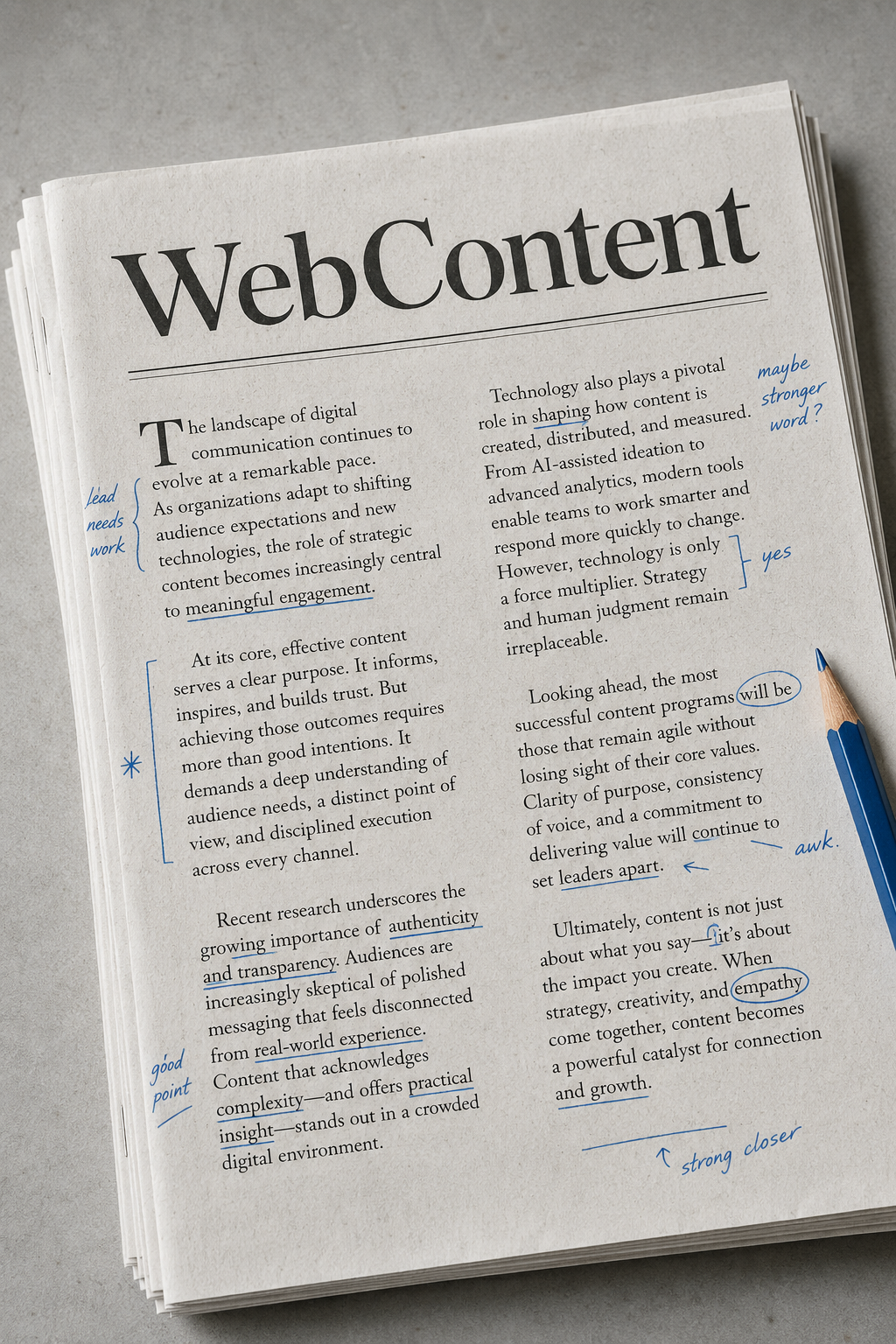
WebContent is an apt name for a publisher that treats the browser as its native canvas. The work can combine a reported narrative with source documents, diagrams, databases, annotations, and updates. A printed book generally ends at publication. A web work can remain accountable to new facts. That does not mean every page must change constantly. It means the house can choose forms that fit the material rather than squeezing every idea into a conventional article.
The buyer might be an established newsletter group ready to unite several titles, an editorial founder assembling a first slate, or an institution spinning out an independent public-interest publication. In each case, the name offers a parent identity. Individual publications can keep distinct voices while readers understand the craft and medium connecting them.
Treat the catalog as the main asset
Daily publishing can obscure the enduring value of a catalog. A strong house plans for both immediate relevance and long use. Editors commission explainers that answer recurring questions, reported pieces that establish a record, and timely analysis that connects new events to existing knowledge. Navigation groups work by reader need and subject rather than simply displaying the latest timestamp first.
Trade reporting from Publishers Weekly provides a wide view of how publishing businesses and formats evolve. Substack has helped many independent writers form direct reader relationships. A WebContent publishing house could draw lessons from both while building its own economics: a portfolio with shared editing, design, audience development, and commercial operations behind distinct editorial properties.
Catalog care should be budgeted like new commissioning. Pages receive correction notes, link checks, accessibility improvements, and scheduled factual review. Important series get index pages and contextual introductions. Related work is connected by editorial judgment, not only by an automated recommendation strip. Readers can see when something was first published, when it changed, and why the change mattered.
Build a house writers want to enter
The publisher's relationship with contributors becomes part of its public identity. Clear pitches, reasonable response windows, careful edits, accurate contracts, and on-time payment are not back-office trivia. They determine who brings the house their best work. Editorial standards should be published, and the commissioning process should match them. Writers need to understand audience, scope, rights, fact-checking, and what support the editor will provide.
A small opening slate is an advantage. Three recurring lines might be enough: deeply reported features, compact field guides, and annotated conversations with practitioners. Each line has a purpose and cadence. Editors can learn which work readers finish, save, discuss, and support. The house can make decisions from those signals without allowing raw traffic to dictate every commission.
Distinctive art direction matters because a publishing brand is encountered one page at a time. Typography, illustration, data display, and page rhythm can tell readers that careful work follows. Templates should create coherence while leaving room for a piece to take the form it needs. The wordmark WebContent can sit quietly above a range of editorial expressions without competing with them.
Choose economics that protect the editorial promise
Revenue may come from memberships, underwriting, licensing, events, research services, or selective advertising. The right mix depends on the subject and audience. Whatever the model, readers should understand the commercial relationship. Sponsors do not choose conclusions. Members support access or participation under clear terms. Client-funded research is labeled. Trust grows when the business model is explained before a conflict tests it.
The address offers expansion room once the core catalog has weight. A house can produce courses with its authors, license reference material, host small expert gatherings, or publish special editions. Those products make sense when they extend editorial knowledge already demonstrated. They feel less convincing when they arrive before readers can name what the publisher stands for.
WebContent.com could become the front door for a serious new imprint built in and for the web. Its owner would need patient capital, excellent editors, and a sharp commissioning thesis. The name makes the medium memorable. The catalog makes the institution valuable. Joined with transparent standards and thoughtful commercial choices, those elements could support a publishing house readers recognize across many titles and return to for years.